
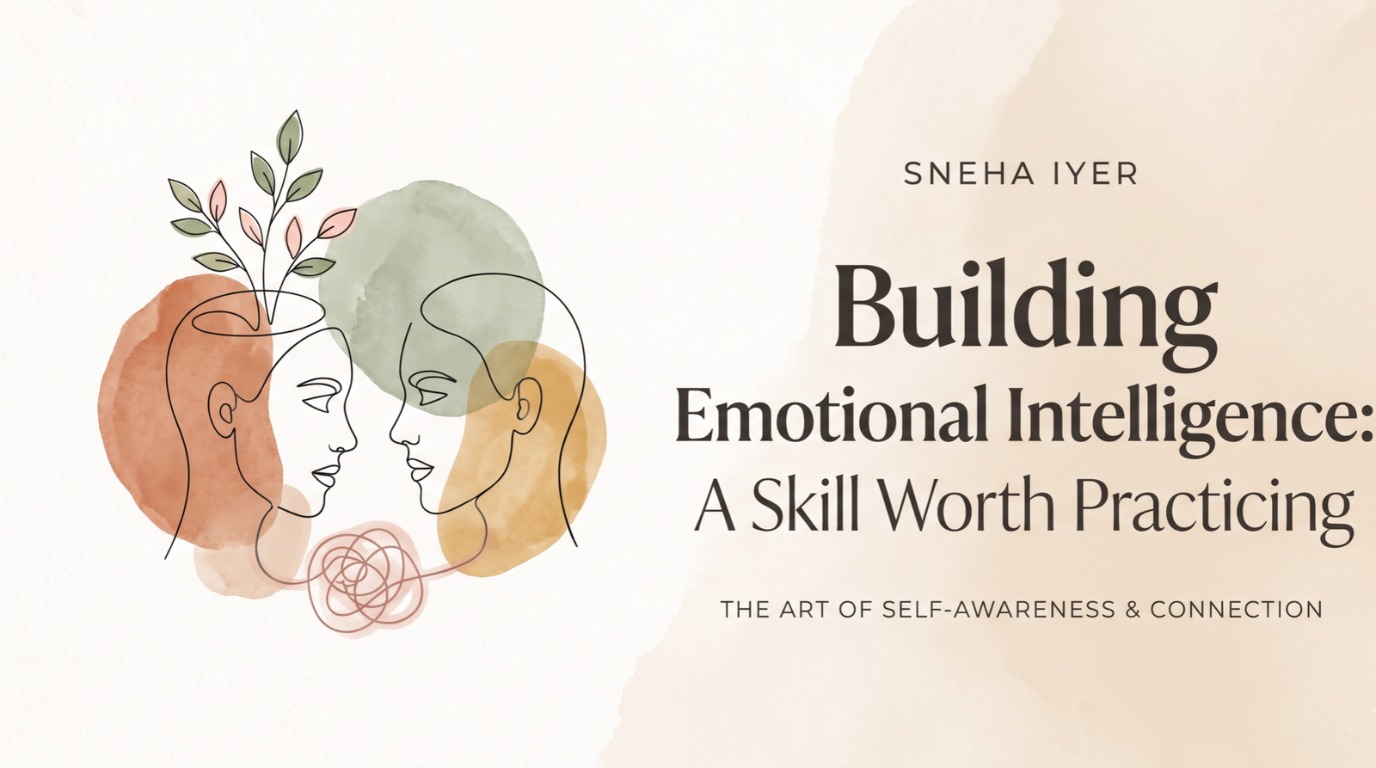
Emotional intelligence — the ability to recognise, understand, and manage emotions in yourself and others — is increasingly recognized as one of the most important skills for both personal wellbeing and professional success. Unlike some traits, emotional intelligence can be genuinely developed with intentional practice.
The Core Components of Emotional Intelligence
Emotional intelligence is generally understood to include self-awareness, self-regulation, motivation, empathy, and social skills. Rather than a single fixed trait, it’s a collection of related capacities that can each be developed individually, making the overall skill highly trainable over time.
Building Self-Awareness First
Self-awareness — accurately recognising your own emotions as they arise — is foundational to emotional intelligence, since you can’t effectively manage or communicate about emotions you haven’t first identified. Simple practices like naming your emotional state throughout the day build this awareness incrementally.
Developing Self-Regulation
Self-regulation isn’t about suppressing emotions but about managing your response to them — pausing before reacting, choosing how to express difficult feelings constructively. Techniques like brief pauses before responding in emotionally charged situations help build this capacity over time.
Practising Empathy Intentionally
Empathy can be strengthened through deliberate practice: genuinely trying to understand another person’s perspective before responding, asking clarifying questions rather than assuming, and paying attention to nonverbal cues that often communicate more than words alone.
Emotional Intelligence in Difficult Conversations
High emotional intelligence is particularly valuable during conflict or difficult conversations, where the ability to stay regulated, listen genuinely, and respond thoughtfully rather than defensively often determines whether the interaction resolves constructively or escalates.
The Workplace Impact
Research consistently links higher emotional intelligence to stronger leadership, better teamwork, and more effective conflict resolution in professional settings. Unlike technical skills, emotional intelligence often becomes more valuable, not less, as roles involve greater responsibility and interpersonal complexity.
Practising Emotional Intelligence Daily
Small, consistent practices — pausing before reacting, checking in with your emotional state, actively listening in conversations — build emotional intelligence more effectively than trying to absorb it as abstract knowledge. Like any skill, it strengthens through repeated, deliberate practice.
Emotional Intelligence in Everyday Interactions
You don’t need a major conflict to practise these skills — everyday moments like a frustrating commute, a miscommunication with a colleague, or a disagreement with a friend all offer low-stakes opportunities to practise self-regulation and empathy, which makes the skill far more accessible to build than waiting for high-pressure situations alone.
Learning From Feedback
Asking trusted people how you come across in stressful or emotional moments — and genuinely listening to the answer without becoming defensive — can reveal blind spots that are difficult to notice on your own, since self-perception often diverges from how our emotional responses actually land with others.
Modelling It for Others
If you’re in a leadership or parenting role, demonstrating emotional intelligence openly — naming your own emotions, apologising genuinely when needed — teaches those around you far more effectively than simply telling them to manage their emotions better.
The Takeaway
Emotional intelligence is a learnable, trainable skill with significant benefits for both personal wellbeing and professional relationships. Building self-awareness, regulation, and empathy through consistent practice pays dividends across nearly every area of life.