
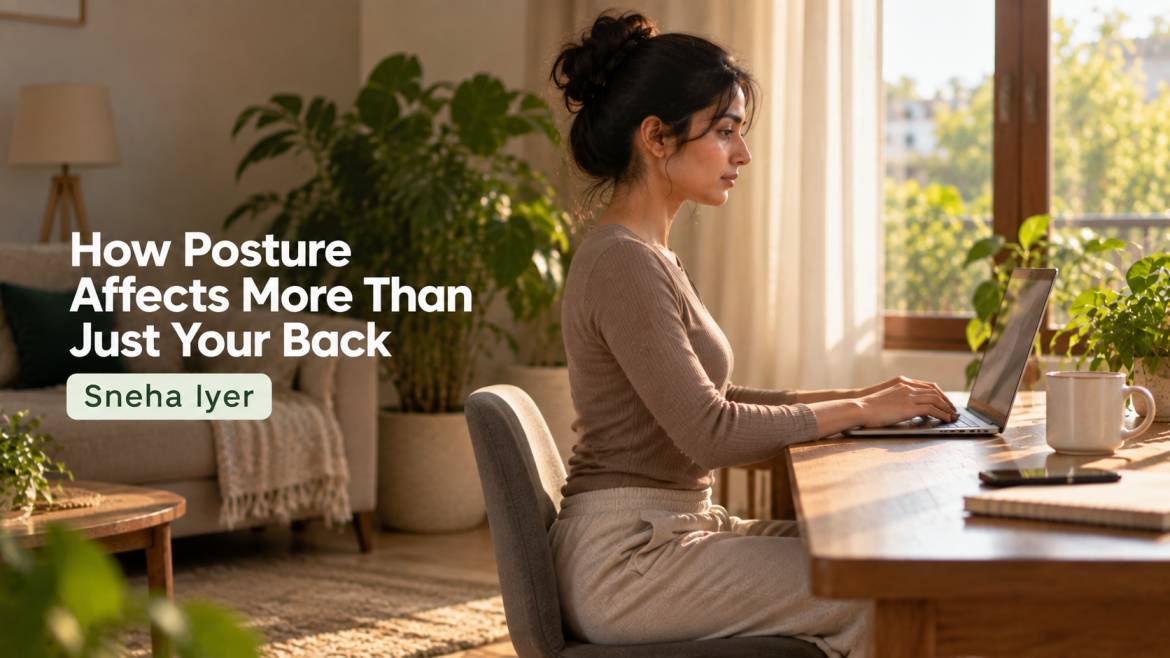
Posture is often thought of purely in terms of back pain and spinal alignment, but its effects extend well beyond the musculoskeletal system. Research increasingly shows that posture influences breathing, energy levels, mood, and even how confident we feel — making it a more central component of overall wellness than many people realize.
The Musculoskeletal Basics
Poor posture, particularly the forward head and rounded shoulder position common with prolonged screen use, places uneven stress on the spine, neck, and shoulder muscles. Over time, this can lead to chronic tension, reduced mobility, and an increased risk of injury, even during everyday movements unrelated to exercise.
Posture and Breathing Efficiency
Slouched posture compresses the diaphragm and rib cage, restricting full, efficient breathing. Since breath quality is closely tied to stress regulation and energy levels, chronically poor posture can contribute to a subtle, ongoing sense of fatigue or tension that’s easy to misattribute to other causes.
The Posture-Mood Connection
Research on “embodied cognition” suggests that posture doesn’t just reflect mood — it can actively influence it. Studies have found that sitting or standing in an upright, open posture is associated with improved mood and reduced stress hormone levels compared to slouched positions, even when the physical circumstances are otherwise identical.
Posture and Confidence
Beyond mood, posture appears to influence self-perception and confidence. Adopting expansive, open postures has been linked in research to increased feelings of power and assertiveness, suggesting that how we hold our bodies can genuinely shape how we show up in situations that matter, from interviews to difficult conversations.
Building Postural Awareness
Improving posture starts with awareness — many people are simply unaware of how they’re sitting or standing throughout the day. Setting periodic reminders to check in with your posture, particularly during long periods at a desk, is a simple, low-effort way to build this awareness over time.
Strengthening the Muscles That Support Posture
Good posture isn’t just about consciously holding a position — it requires adequate strength in the core, upper back, and glutes to support proper alignment without constant effort. Practices like Pilates and targeted strength training play an important supporting role in making good posture sustainable rather than exhausting.
Small Environmental Adjustments
Simple changes — raising a laptop screen to eye level, using a chair with proper lumbar support, taking regular movement breaks — reduce the postural strain that builds up during long periods of sitting, particularly for those who work at a desk most of the day.
Posture During Everyday Activities
Beyond desk work, paying attention to posture while doing dishes, scrolling on your phone, or driving can catch some of the most common sources of cumulative strain, since these small, repeated moments often add up to more postural stress than occasional intense activity.
Posture While Sleeping
Sleep posture matters too — a supportive pillow and mattress that maintain natural spinal alignment can prevent the stiffness and discomfort that often carries into the next day, especially for side and back sleepers.
The Takeaway
Posture affects far more than back health — it shapes breathing, mood, and even confidence. Building awareness and supporting strength around posture is a simple but often overlooked component of overall wellness.
Author Bio
Sneha Iyer is a healthcare professional with a passion for education, academic mentorship, leadership, and community service. She has experience supporting medical students, contributing to healthcare initiatives, and working with underserved communities. Her interests include healthcare, education, health policy, and creating meaningful opportunities to help others learn and grow.